
El Hierro works better as a road-trip island than as a single-stop destination. In just a few days, you can combine high viewpoints, sheltered natural pools, small villages, and volcanic roads that change a lot from one side to the other.
If you’re wondering what to see and do in El Hierro on a first trip, this guide goes straight to the important stuff. It brings together the places that are really worth visiting, explains which can be done in the same day, and helps you decide if you’re in the mood for a relaxing swim, viewpoints, easy trails, snorkeling, or a scenic drive.
For a first visit, the most practical thing is usually to get around by car and use the north as your base. If you’re going for 2, 3, or 4 days, it’s worth organizing the island by zones: north for towns and first stops, west for volcanic landscapes, south for swimming and snorkeling, and inland for viewpoints and easy trails. If you first want a more condensed version to plan the island wisely, start with El Hierro. If you prefer to dive straight into the details of arrival and services, the guide to Villa de Valverde will point you in the right direction. And in Turismo Canarias homepage you can later jump to the rest of the islands that have already been covered.
What to see and do in El Hierro at a glance
- Villa de Valverde, if you want a comfortable base to sleep, grab a bite, and start the route without hassle.
- Charco Azul and La Maceta, for a good swimming plan in the north with relatively easy access.
- Orchilla Lighthouse and Verodal, if you feel like exploring the wilder, more remote part of the island.
- Garoé Tree and La Llanía, for history, forest walks and inland scenery.
- Isora Viewpoint and Tacorón, if you want to combine high views with calm sea in the south.
- El Sabinar, if you want to see one of the most recognizable landscapes of El Hierro.
- Tamaduste and La Caleta, for a relaxed day of swimming and seaside village life.
How to organize a route around El Hierro
A car is almost essential, and it’s best to split the island into zones so you don’t spend your day just connecting curves. A realistic way to plan it would be this:
- 2 days: north and west one day, and south and inland another.
- 3 days: add more relaxed stops in Tamaduste, La Caleta, or Pozo de las Calcosas.
- 4 days or more: leave room to repeat a swim, do La Llanía at a leisurely pace, or fit in Sabinar, Orchilla, and El Julan on the day when the weather is best.
What to see and do in El Hierro by area or type of plan
Easy north and first stops
Valverde, Mirador de La Peña, Charco Azul, La Maceta, Pozo de las Calcosas, La Caleta, and Tamaduste make up the easiest loop if you arrive by plane or want a first day without long trips.
Volcanic west and open landscapes
Verodal, the Orchilla Lighthouse, Puntas de Gutiérrez, and El Sabinar are the stops that best capture the island’s rougher and most photogenic side. It’s worth leaving early and checking the wind and sea.
Calm south and swimming plans
La Restinga and Tacorón work really well if you’re looking for calm waters, snorkeling, and a more relaxed pace. They’re also good stops for a short getaway or for those who prioritize the sea.
Green interior, viewpoints, and gentle trails
Garoé Tree, Isora Viewpoint, Jinama, La Llanía, and El Julan fit better when you feel like mixing a scenic drive with history and some easy walking.
Villa de Valverde, the most convenient base to start your route
Valverde is the capital of El Hierro. Unlike the other Canary Island capitals, it sits inland rather than on the coast. It offers a convenient place to stay while exploring the island, as an alternative to La Restinga or La Frontera.
In La Villa, we can find points of interest such as the Church of Our Lady of the Conception or the Town Hall, as well as the most commercial part of the island.


Herreña Quesadillas
The most iconic food item of El Hierro is the Quesadillas. A kind of little sponge cake shaped like a flower made with Herreño cheese. This native cheesecake has been made since the early 1900s, and today we can get them from the original family creators, Fábrica Adrián Gutiérrez e Hijas in Villa de Valverde. An excellent breakfast to start our tour of El Hierro.

La Peña Viewpoint
The Mirador de La Peña, designed by César Manrique, is one of the stops that best sums up the north of El Hierro. From here, you can overlook the Valle del Golfo, and if the day is clear, it’s worth stopping slowly, having a drink, and using it as a first panorama before heading to natural pools and coastal villages.
In the viewpoint area, you can also find a small, very well-kept garden, from where you can observe the rocky valley formed by a landslide more than 800,000 years ago. From its 700 meters of altitude, you can also see the Roques de Salmor and sights we’ll see later, such as natural pools, the Puntagrande Hotel, or the Guinea Ecomuseum and its colony of Giant Lizards.


Puntagrande Hotel, an interesting stop in the north
Hotel Puntagrande remains a curious stop on the northern route. It holds the Guinness World Record as one of the smallest hotels in the world, and although you don’t need to stay there to enjoy it, the surroundings are definitely worth a short stop to see how it overlooks the sea.

It’s a hotel that prides itself on immense tranquility, built on a tiny cape that juts out into the sea. Nowadays, it is possible to stay there by booking through its website, but we warn you that it is not the most economical option in the area. Still, it’s worth taking a walk around its surroundings, in the municipality of Las Puntas.
Guinea Ecomuseum
This open-air museum is a time capsule that takes you back to the rural life of El Hierro. Here we can explore traditional Herreño houses and learn about the customs and lifestyle of the island’s original inhabitants. At the information point, we’ll find a tour that will explain the history of this village.

The museum also houses a recovery center for El Hierro giant lizards, an endemic species. They were thought to be extinct, but luckily small colonies were found that the Cultural Park of the Ecomuseum is protecting and helping to breed. These lizards can reach about 80 centimeters in length.
Charco Azul
Charco Azul lies on El Hierro’s northern coast, near the Guinea Ecomuseum. Volcanic rock frames this striking seawater pool, with views out to the Atlantic. Enjoy the setting, but check sea conditions before swimming: natural pools are not safe when waves are breaking over them.

La Maceta Natural Pool
Very close to the famous Charco Azul, we find the natural pools of La Maceta. This pool is more accessible and offers a more comfortable recreational area, including more spaces to sunbathe and amenities such as restrooms and parking. A great Infinity Pool over the Atlantic, next to which you’ll find some seaside restaurants where you can enjoy a good meal after a swim.

Puntas de Gutiérrez Viewpoint
Following the road west, one of the most striking areas of El Hierro appears. The Puntas de Gutiérrez viewpoint allows you to see the Arco de la Tosca, the sea striking the lava, and a very open volcanic landscape that is especially rewarding if you like to stop to take photos and walk a bit.

Lomo Negro Viewpoint
In this area of the island full of sea viewpoints, we can go up the winding road until we reach the Lomo Negro viewpoint. From here, we can admire the wonderful volcanic landscape of the northern and western parts of the island. Our recommendation is to take a small trail up to the Lomo Negro II Viewpoint, which in just a few minutes will give you even more panoramic views of the area. We were lucky enough to find goats around the trail area.


Verodal Beach
This red sand gem is a must-visit for anyone coming to El Hierro. The contrast of the reddish iron with the blue of the sea looks like a painting, and considering that the island isn’t very crowded and you’ll likely have the beach to yourselves… it’s spectacular. The beach is next to a tall rocky cliff, which unfortunately has a risk of falling rocks, so it’s not recommended to go onto the sand. Next to the beach, there’s also a picnic area where you can cook over a fire and enjoy views that are worth it for how untouched and wild the landscape is, along with an arch for watching the sunset.


Orchilla Lighthouse
The Orchilla Lighthouse, located at the western tip of the island, is famous for having been the prime meridian until the 19th century. The area around the lighthouse is wild and beautiful, with stunning ocean views and the chance to enjoy peace and quiet away from the more populated areas.
Get ready for a winding road, with some unpaved sections, and keep in mind that there is no phone coverage in the area. It’s one of the most remote spots on the island, wildly spectacular, and another special place to enjoy a dreamy sunset. After visiting the lighthouse, we continued to the Orchilla Pier, which is perfect for taking a dip.

Meridian 0 Monument
Next to the Orchilla Lighthouse, we found a trail that leads to a small monument dedicated to the Prime Meridian, the westernmost point of the island. Until 1885, this was considered the 0º meridian, the westernmost point of the known world, later called the old world, until that year when it was moved to Greenwich, England.

Garoé Tree
The Sacred Tree of Garoé has a very special history on the island of El Hierro, since it was considered sacred by the Bimbaches, the ancient inhabitants of the island. It was believed that this Macaronesian tree saved the inhabitants from severe droughts thanks to the water that flowed from its leaves.

Nowadays, we can find a specimen at the Garoé Tree Interpretation Center, but unfortunately, it is not the original one that, according to the stories, saved the island’s inhabitants, as it was knocked down by a hurricane 400 years ago. However, in 1949, the tree that we can see today was planted. To reach it, we recommend wearing good footwear, as there is a route from the parking lot to the tree that isn’t long, but it can be slippery due to the area’s humidity.
If you’re interested in that part of the Bimbache past and the changes the archipelago experienced, this summary about it might also be useful to you History of the Conquest of the Canary Islands.
Isora Viewpoint
El Mirador de Isora is one of the best viewpoints on the east side of the island. The cliff drops almost vertically to the coast, and from here you can really get a sense of the scale of El Hierro, so it’s a perfect stop before heading down to La Restinga or Tacorón.

Mirador de las Playas
A little further south from the Isora viewpoint, we find Mirador de las Playas. The view is similar, but from here you can see the cliff head-on, with views of La Gomera and Tenerife, and on clear days, the impressive Teide.

Near this viewpoint, we went to eat at a little Bimbachinche called Las Lapas, which we recommend. A bimbachinche is El Hierro’s counterpart to a Tenerife guachinche: an informal, family-run place serving local food and wine. We will explore the island’s food in more detail in a separate article.


La Restinga
At the southern tip of the island is La Restinga, a small fishing village closely linked to diving and snorkeling. If the trip revolves around the sea, this is the most logical base, because it has diving centers, a harbor, bars, and a very calm atmosphere.
You do not need to dive to enjoy La Restinga. The village is beside the Mar de las Calmas marine reserve and is a convenient starting point for a visit to Tacorón. It works well for a slower-paced day on the southern coast.


Tacorón Beach
Tacorón is one of the best bathing spots in the south of El Hierro. The small, reddish cove is very eye-catching, but for most people, the practical option is the picnic area and surrounding tide pools, which let you spend several hours more comfortably.
If you like snorkeling or are planning a quiet day by the sea, the conditions here are usually better than at other more exposed spots on the island. It’s a good idea to bring water, some shade, and check the sea conditions before heading down.

Tacorón Viewpoint
Just a little bit above Tacorón Beach, you’ll find a viewpoint that shares its name. It’s an interesting stop even before heading down to the beach, since the area has different coves, some more accessible than others. From this viewpoint, where your eyes will get lost in the vastness of the ocean, you can also spot whales and dolphins on their migratory routes.
Pozo de Las Calcosas
In the north of El Hierro, Pozo de las Calcosas combines a traditional village with a natural pool in one of the island’s most recognizable landscapes. It’s worth visiting even if just to see it from above, and if you decide to go down, make sure to save some energy for the climb back up.

Traditional stone houses with rye-straw roofs stand among the lava at this tiny fishing settlement. Steep steps lead down to the village and natural pool, so allow time and energy for the climb back. The view from above shows the contrast between the houses, lava flows and sea.
El Julan
One of the most interesting historical spots on the island of El Hierro is the El Julan Archaeological Interpretation Center, where we can learn about the island’s ancient inhabitants, the Bimbaches. This cultural center has a museum and offers guided tours a couple of times a day to visit the archaeological site and its numerous petroglyphs. From El Julan, there’s also a viewpoint with stunning views to the south.


Jinama Viewpoint
This viewpoint offers us privileged views to the north, with the island of La Palma in front of the Gulf Bay. It’s important to keep in mind that this area is very cloudy, so it’s not always easy to get a clear day to enjoy the views. However, this humidity makes the area greener and more vegetated, offering us trails in the area like the Jinama path.

Llanía Trail
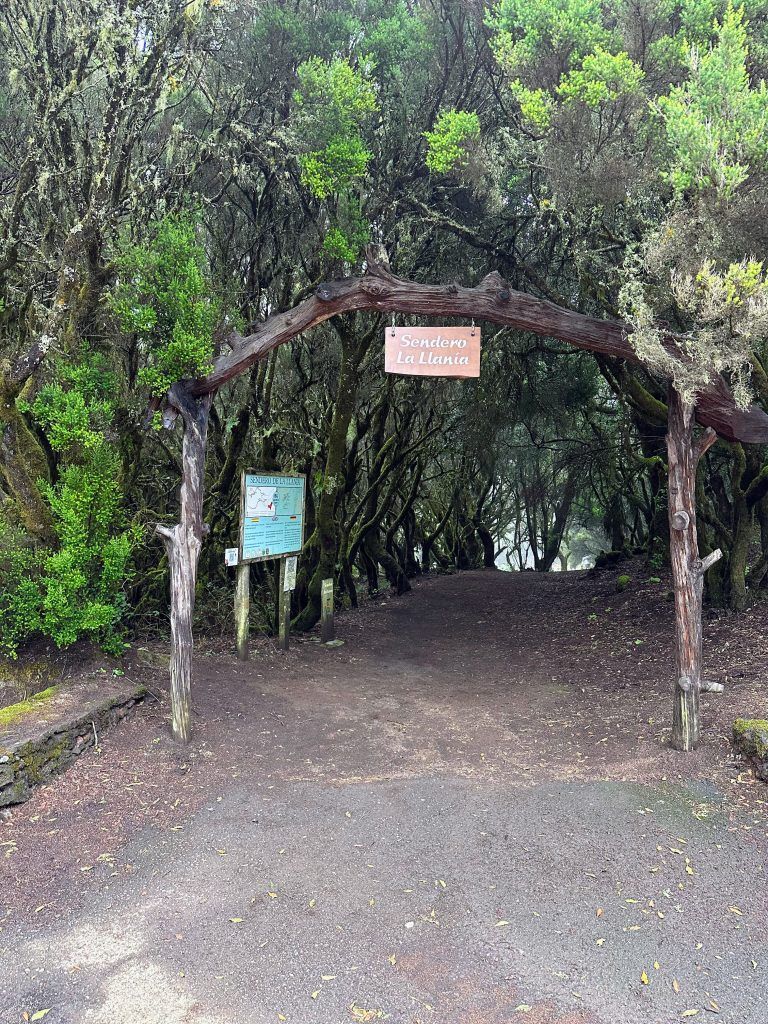
La Llanía is a rewarding walking area with routes of different lengths through lush laurel forest. Even a short visit lets you experience a greener side of El Hierro.
About 10 minutes from the parking lot by the road, we reach the Llanía viewpoint from any of the routes we take. This is a little preview of the intense green vegetation we can see along the route, with a mystical touch thanks to the fog in the area. One of the most beautiful forests we’ve seen, this area of Canarian Laurisilva on El Hierro.

The Sabinar of El Hierro
El Hierro’s wind-sculpted junipers are among its best-known sights. Their twisted branches bend close to the ground, shaped by years of exposure. At El Sabinar, in La Dehesa, you can see these remarkable trees in their open volcanic setting.

The most famous of them all is protected with fences, since nowadays the biggest threat to these trees isn’t the wind but rather disrespectful tourists. It’s located next to a parking lot, which we’ll reach after following a dirt road that starts at the Sanctuary of Our Lady of the Kings, where we also recommend making a stop.
Roque de la Bonanza
Roque de la Bonanza rises from the sea about 200 metres off the coast in the Las Playas area. You can see it from Mirador de Isora and Mirador de las Playas, but a stop by the shore gives a closer view of the rock formation.

Piscinas de la Caleta
In the small town of La Caleta in the north of the island, between the port of La Estaca and El Hierro airport, we find the La Caleta pools. This recreational area combines natural pools with sea access with artificial swimming pools and all the amenities like parking, bathrooms, and showers. It’s an ideal spot to dive into the ocean, sunbathe, and spend a family day relaxing by the sea.

Tamaduste
Tamaduste is known for its calm protected bay, which offers perfect conditions for swimming and diving. This small town is also great for strolling around and enjoying the local cuisine, with several restaurants serving typical island dishes like limpets soup.


This town is very popular with locals because of its natural pools. Since the bay is large, don’t expect to be alone like in other places on the island. However, it is one of the most iconic areas of El Hierro, where you can enjoy the relaxed lifestyle of the locals.
Practical tips for visiting El Hierro
- If you only have a weekend, focus on the north and west one day and leave the south for the other.
- For swimming, consider Tacorón, La Caleta or Tamaduste when conditions are safe. Verodal is better appreciated for its scenery, with particular care around the cliffs.
- Villa de Valverde still remains the most practical base if you arrive by plane or ferry, while La Restinga works better if your trip revolves around diving.
- At viewpoints like Isora or Jinama, fog and wind can change the experience a lot, so it’s a good idea to leave some flexibility in your schedule.
Map of El Hierro to plan your route
Use the map to locate the main stops, open directions and group nearby places into a practical itinerary from your accommodation.