
The conquest of the Canary Islands wasn’t a quick campaign nor a single story repeated seven times. It started in 1402, lasted almost a century, and moved at very different paces depending on the island, with a first noble-led phase and a second phase then directed by the Crown of Castile.
If you just need a clear summary, stick with this idea: Lanzarote and Fuerteventura fell early, while Gran Canaria, La Palma, and especially Tenerife offered much longer resistance. That’s why, when someone asks about the conquest of the Canary Islands, they’re actually talking about several interconnected conquests.
Understanding that process helps you make sense of many things that are still visible today on a trip around the archipelago, from the old power centers to parts of the religious, military, and urban heritage that came later. Here we lay it out without an academic tone, with clear dates and a reading by island so it’s really easy to follow.
- Start of the process: 1402, with the expedition of Jean de Bethencourt and Gadifer de La Salle.
- Usual military end: 1496, after the conquest of Tenerife.
- Key to not getting confused: the seigneurial conquests came first, followed by campaigns led directly by the Crown.
- The longest resistance: Tenerife, with the final campaigns from 1494 to 1496.
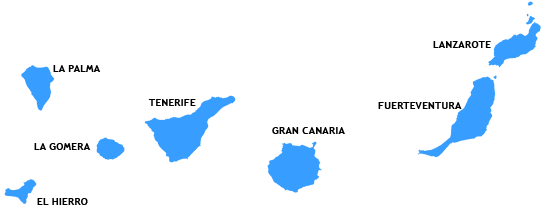
Quick summary of the conquest of the Canary Islands
The conquest is usually divided into two phases. During the seigneurial phase, nobles and adventurers acted on their own initiative under agreements with the Crown. This phase mainly involved Lanzarote, Fuerteventura, El Hierro and La Gomera. Later, the Crown of Castile took direct control of the campaigns, seeking to secure the archipelago and its strategic position in the Atlantic.
That second phase, the royal conquest, was much more costly and violent. It affected mainly Gran Canaria, La Palma, and Tenerife, three more populated islands, with stronger organized resistance and terrain that made military campaigns much more difficult.
- 1402: The Norman expedition sets off in Lanzarote.
- 1404-1405: Control over Fuerteventura advances.
- 15th century: El Hierro and La Gomera remain within the manorial system, although with local conflicts and resistance.
- 1478-1483: Castilian campaign in Gran Canaria.
- 1492-1493: Conquest of La Palma.
- 1494-1496: Final war in Tenerife, with episodes like Acentejo.
The two main phases
Seigneurial conquest
It’s called that because it wasn’t yet fully led by the royal apparatus, but by lords who obtained rights over the islands in exchange for subduing, populating, and exploiting them. It was a more uneven conquest, with agreements, violence, prior raids, and changes of control. Lanzarote and Fuerteventura are the clearest cases of this first phase.
In El Hierro and La Gomera, Castilian control also ended up taking hold within that feudal framework, although the local situation was different on each island and you can’t lump everything together. The important thing is that we’re still not facing the big final offensive across the whole archipelago.
Royal conquest
When Castile decides to intervene directly, the scale changes. It’s no longer just about private expeditions or feudal agreements, but about securing a strategic territory before the Atlantic expansion toward Africa and America. That’s where Gran Canaria, La Palma, and Tenerife come in, with campaigns that were much better organized, longer, and more expensive.
That’s also why Tenerife takes up so much space in Canarian historical memory. It was the most complex resistance, with menceyatos, tough battles, and a conquest that wasn’t completed until 1496. If you’re wondering why multiple dates show up in different summaries, the answer usually lies in this difference between stages and islands.
What happened on each island
Looking at it by island avoids a lot of confusing summaries. This is the brief outline that works best for getting oriented.
- Lanzarote: it was the first major base of Bethencourt’s expedition. Its conquest started in 1402 and is usually used as the starting point to date the entire process.
- Fuerteventura: was incorporated shortly after, also within the feudal phase. In summaries, it usually appears alongside Lanzarote because the advance happened early.
- El Hierro: ended up being integrated into that first stage, although with its own history marked by deportations and deep changes in the population. If you want to place it on a current trip, our El Hierro guide helps to better understand the importance of its historical centers and places like Guinea.
- La Gomera: was linked to the lordship, with internal conflicts and very harsh episodes afterward. It didn’t experience the same campaign as Tenerife or Gran Canaria, although everything is often lumped together.
- Gran Canaria: was the scene of a decisive royal campaign between 1478 and 1483. The conquest of Gran Canaria is therefore often discussed as a subject in its own right.
- La Palma: was conquered between 1492 and 1493. The process was shorter than in Tenerife, but it also marked the future division of power and territory. In the La Palma guide shows how this past remains visible in Santa Cruz de La Palma and other historic places.
- Tenerife: finished the conquest of the Canary Islands in 1496 after the longest and best-known resistance. If you later want to connect that context to places you can visit today, the Tenerife travel guide and this selection of Tenerife’s monuments are the most logical continuation.
What changed afterward in the islands
The conquest wasn’t just a series of battles. It changed land ownership, the organization of power, the official religion, the distribution of the population, and the position of the Canary Islands within Atlantic routes. It also started a harsh process of slavery, displacement, and mixing of peoples that became part of the foundation of later Canarian society.
That’s why this episode can’t really be understood if it’s only seen as a military victory. What came after affected the language, the economy, the island capitals, the network of churches and convents, and the way many historic centers grew over the following centuries.
If you visit the Canary Islands today with some historical curiosity, that legacy shows up in layers. Sometimes you notice it in a museum or an archaeological village. Other times, in the urban layout, an old chapel, a fortification, or local stories about the conquest and resistance.

Exploring this history on a visit to the islands
The summary above provides an introduction to the conquest. If you are planning a trip, exploring the history island by island can add context to museums, towns and archaeological sites along your route.
For ideas on places to visit, continue with our three island guides: the Tenerife travel guide, the El Hierro and La Palma guide. For a more focused look at historic sites, read our guide to historical monuments of Tenerife, which connects this history with places you can visit today.
Common questions about the conquest of the Canary Islands
In what year was the conquest of the Canary Islands?
If you’re looking for a single date, the most commonly used answer is 1402 as the start and 1496 as the final end. But it’s more accurate to talk about a long process, because each island had different times and campaigns.
Which was the hardest island to conquer?
Tenerife is usually considered the toughest resistance and the most complex final campaign. That’s why it takes such a central place in almost all historical summaries about the conquest of the archipelago.
What is the difference between seigneurial and royal conquest?
Because not all islands were subdued in the same way. First, lords and expeditions with rights granted by the Crown took action. Later, Castile directly intervened in the decisive campaigns on Gran Canaria, La Palma, and Tenerife.